casino baccarat spielen 2026 — baccarat spielen lernen
casino baccarat spielen – Tipps und Tricks für 2026
casino baccarat spielen ist ein Glücksspiel mit langer Tradition. Dennoch sollte man die Bedeutung von baccarat spielen ohne anmeldung nicht unterschätzen, denn es prägt den gesamten Spielverlauf.
Siehe auch:
- baccarat spielen mit system – Der Schlüssel zu Ihrem Casino-Erlebnis
- Tipps und Tricks: baccarat spielen lernen richtig einsetzen.
- Vermeiden Sie die häufigsten Fehler bei baccarat spielen ohne anmeldung.
- Was sagt das Gesetz über baccarat spielen lernen?
- RTP Vergleich: Baccarat & andere Tischspiele
- Visuelle Übersicht: Baccarat Tischlayout
- Kann baccarat spielen mit system wirklich funktionieren?
- Selbstausschluss und Spielerhilfe in Deutschland 2026
baccarat spielen mit system – Der Schlüssel zu Ihrem Casino-Erlebnis
casino baccarat spielen isch es klassischs Tischspiel, wo s Gittern vo de grösste Charte möglich isch. Dä Spieler het d Möglichkeit, uf d Bankiershand, d Spielerhand oder es Unentschiede z setze. Hie isch es wichtig, d Strategie hinter em baccarat spielen mit system z verstah, zum d Gwinnchance z erhöhe. Es isch eifach z lehre, aber het e tüüfi Taktik, wo vil Spass macht. S Spiil wird mit acht Decks Charte gschpilt, wo i eme Schueh gmischt werded. D Ziel isch, uf d Hand z setze, wo am nöchschte a 9 Punkt isch. D Charte vo 2 bis 9 zelled zu ihrem Nennwert, d 10 und d Bilder zelled zu 0, und s Ass zellt zu 1. Wenn d Summe vo de Charte 10 oder meh isch, wird nume di letscht Ziffer zellt. Zum Bischpil, en Hand mit 7 und 5 git 2 (12 minus 10). S Spiil fangt a, indem de Bankier und de Spieler jewiils zwei Charte überchömed. Je nach em Wert vo dene Charte wird e dritti Charte zueteilt, aber nume nach spezifische Regle. D Bankiershand entscheidet, ob es en dritte Charte bruucht basierend uf em Wert vo de erste zwei Charte und ob de Spieler es dritts Blatt übercho het. D Regle sind immer glich und nöd vom Spiiler beiiflussbar. Das macht casino baccarat spielen zu me reine Glücksspiil, aber d Wetteinsatz und d Verwaltig vo de Chips erfordere es strategischs Denke. De baccarat spielen ohne anmeldung isch e bekannti Wettstrategii, wo uf em Muster vo de letzte Händ basiert. Es wird empfohle, nume uf d Bankiershand z setze, wil die statistisch gsee die bescht Gwinnchance het. De Bankier het en Huusvorteil vo 1,06 Prozänt, während de Spiiler 1,24 Prozänt Vorteil het. Unentschiede het en Huusvorteil vo 14,4 Prozänt, drum isches nöd empfolle. Anderi Strategie wie d Martingale oder d Fibonacci-System chönd au agwändet werde, aber si erhöhe s Risiko. S Spiil isch i de letschte Jahr immer beliebter worde, vor allem i de Online-Casino. Es git verschiedeni Variante, wie casino baccarat spielen Chemin de Fer oder casino baccarat spielen Banque. casino baccarat spielen Punto Banco isch die hüfigschti Version, wo au i de grosse Casino vo Las Vegas gspilt wird. De Spiiler het ke Iifluss uf d Charte, nume uf d Wette. Drum isches wichtig, e Bankroll-Management z ha. S Spiil verlauft schnell, drum sött me nöd z vil setze. Vili Spiiler benutze es Notizblättli zum d Resultat ufzschribe, zum Muster z finde. Aber es isch ke Garantie, will jedes Spiil unabhängig isch. De baccarat spielen lernen isch e beliebti Methode zum d Wahrscheinlechkeite z berechne. D Grundidee isch, dass wenn es Ereignis weniger als di erwarteti Zit uftritt, s denn spöter uftrette muess. Das isch aber en Fehlschluss, will d Charte ke Gedächtnis händ. Nume langfristig dure d Probabilidät. Drum söll me de baccarat spielen ohne anmeldung nume als Füehlung bruuche.
Tipps und Tricks: baccarat spielen lernen richtig einsetzen.
In the field of modern meteorology, the integration of deep learning techniques has revolutionized weather forecasting, enabling more accurate predictions of atmospheric phenomena. Convolutional neural networks (CNNs) are particularly effective at analyzing satellite imagery and radar data, identifying patterns that might escape traditional numerical models. For instance, a CNN trained on historical data can detect the subtle precursors of a thunderstorm, such as sudden changes in cloud texture or rapid temperature drops, hours before they occur. This approach has reduced false alarm rates for severe weather events by up to 30% in pilot studies conducted across the United States. Additionally, recurrent neural networks (RNNs) and long short-term memory (LSTM) networks are employed to model temporal sequences, capturing the evolution of weather systems over time. These models ingest time-series data from weather stations, buoys, and aircraft reports, learning dependencies that span days. A notable implementation is the use of encoder-decoder architectures for precipitation nowcasting, where past radar frames are encoded into a latent representation and decoded into future frames. This method outperforms optical flow techniques by adapting to non-linear motion and intensity changes. Furthermore, graph neural networks (GNNs) are emerging as tools for representing spatial relationships among weather variables, treating the atmosphere as an irregular grid of interacting nodes. Each node corresponds to a grid cell with features like temperature, humidity, and wind speed, while edges encode physical proximity and dynamical couplings. Training these GNNs requires massive datasets, often sourced from reanalysis products like ERA5, which provide global coverage from 1940 to present. Data augmentation techniques, such as random cropping and rotation of spatial fields, mitigate overfitting and improve generalization across different geographic regions. Transfer learning allows models pre-trained on European data to be fine-tuned for tropical regions, significantly reducing the need for region-specific training data. However, challenges remain, including the handling of extreme events that are rare in historical records. Generative adversarial networks (GANs) are being explored to synthesize plausible extreme weather scenarios, enriching training datasets and improving robustness. Another frontier is the incorporation of uncertainty quantification, using Bayesian neural networks to output probabilistic forecasts with confidence intervals. This provides decision-makers with risk-aware information, crucial for emergency management. In operational settings, hybrid models that combine numerical weather prediction (NWP) outputs with machine learning corrections have shown superior skill. The AI component learns to correct systematic biases in NWP, such as underrepresentation of convective processes, by mapping NWP inputs to observed errors. This method, known as model output statistics (MOS) boosted by neural networks, has become standard in many national weather services. For example, the European Centre for Medium-Range Weather Forecasts (ECMWF) now integrates an ML-based post-processing step for wind and temperature forecasts, reducing root mean square error by roughly 15%. On the hardware side, dedicated tensor processing units (TPUs) and field-programmable gate arrays (FPGAs) accelerate inference, enabling real-time updates every few minutes for short-range forecasts. Edge computing devices deployed in remote areas can run lightweight models for local storm prediction, relying on limited communication bandwidth. The open-source movement has fostered communities like WeatherBench, which provides benchmark datasets and standardized metrics for comparing ML models. This has accelerated progress, with top models achieving continuous ranked probability scores (CRPS) close to the theoretical lower bound for certain variables. Ethical considerations also arise: reliance on black-box models may hinder interpretability, so efforts are underway to develop explainable AI (XAI) methods that highlight influential features and causal relationships. For instance, saliency maps can show which satellite channels a CNN uses when predicting hail size, aiding meteorologists in verification. Looking ahead, the fusion of AI with quantum computing could tackle the curse of dimensionality in atmospheric models, but practical implementations are decades away. In summary, deep learning has not only improved forecast accuracy but also opened new avenues for understanding atmospheric dynamics. The synergy between data-driven methods and physical models continues to push the boundaries of what is possible, promising even more reliable and granular predictions in the face of climate change. As we gather more data from next-generation satellites and IoT sensors, the potential for AI to revolutionize weather forecasting will only grow. Specific case studies include the successful prediction of Hurricane Florence’s track using an ensemble of LSTMs, which provided critical lead time for evacuations in 2018. Similarly, in China, a deep learning model for air quality forecasting has been operationalized, reducing public health risks by issuing accurate PM2.5 warnings. These examples underscore the tangible benefits of AI integration. The future will likely see fully autonomous weather AI systems that continuously learn from real-time data, adapting to changing climatic regimes without human intervention.
black jack 2026 — Kostenlos spielen lernen
Vermeiden Sie die häufigsten Fehler bei baccarat spielen ohne anmeldung.
In the field of modern meteorology, the integration of deep learning techniques has revolutionized weather forecasting, enabling more accurate predictions of atmospheric phenomena. Convolutional neural networks (CNNs) are particularly effective at analyzing satellite imagery and radar data, identifying patterns that might escape traditional numerical models. For instance, a CNN trained on historical data can detect the subtle precursors of a thunderstorm, such as sudden changes in cloud texture or rapid temperature drops, hours before they occur. This approach has reduced false alarm rates for severe weather events by up to 30% in pilot studies conducted across the United States. Additionally, recurrent neural networks (RNNs) and long short-term memory (LSTM) networks are employed to model temporal sequences, capturing the evolution of weather systems over time. These models ingest time-series data from weather stations, buoys, and aircraft reports, learning dependencies that span days. A notable implementation is the use of encoder-decoder architectures for precipitation nowcasting, where past radar frames are encoded into a latent representation and decoded into future frames. This method outperforms optical flow techniques by adapting to non-linear motion and intensity changes. Furthermore, graph neural networks (GNNs) are emerging as tools for representing spatial relationships among weather variables, treating the atmosphere as an irregular grid of interacting nodes. Each node corresponds to a grid cell with features like temperature, humidity, and wind speed, while edges encode physical proximity and dynamical couplings. Training these GNNs requires massive datasets, often sourced from reanalysis products like ERA5, which provide global coverage from 1940 to present. Data augmentation techniques, such as random cropping and rotation of spatial fields, mitigate overfitting and improve generalization across different geographic regions. Transfer learning allows models pre-trained on European data to be fine-tuned for tropical regions, significantly reducing the need for region-specific training data. However, challenges remain, including the handling of extreme events that are rare in historical records. Generative adversarial networks (GANs) are being explored to synthesize plausible extreme weather scenarios, enriching training datasets and improving robustness. Another frontier is the incorporation of uncertainty quantification, using Bayesian neural networks to output probabilistic forecasts with confidence intervals. This provides decision-makers with risk-aware information, crucial for emergency management. In operational settings, hybrid models that combine numerical weather prediction (NWP) outputs with machine learning corrections have shown superior skill. The AI component learns to correct systematic biases in NWP, such as underrepresentation of convective processes, by mapping NWP inputs to observed errors. This method, known as model output statistics (MOS) boosted by neural networks, has become standard in many national weather services. For example, the European Centre for Medium-Range Weather Forecasts (ECMWF) now integrates an ML-based post-processing step for wind and temperature forecasts, reducing root mean square error by roughly 15%. On the hardware side, dedicated tensor processing units (TPUs) and field-programmable gate arrays (FPGAs) accelerate inference, enabling real-time updates every few minutes for short-range forecasts. Edge computing devices deployed in remote areas can run lightweight models for local storm prediction, relying on limited communication bandwidth. The open-source movement has fostered communities like WeatherBench, which provides benchmark datasets and standardized metrics for comparing ML models. This has accelerated progress, with top models achieving continuous ranked probability scores (CRPS) close to the theoretical lower bound for certain variables. Ethical considerations also arise: reliance on black-box models may hinder interpretability, so efforts are underway to develop explainable AI (XAI) methods that highlight influential features and causal relationships. For instance, saliency maps can show which satellite channels a CNN uses when predicting hail size, aiding meteorologists in verification. Looking ahead, the fusion of AI with quantum computing could tackle the curse of dimensionality in atmospheric models, but practical implementations are decades away. In summary, deep learning has not only improved forecast accuracy but also opened new avenues for understanding atmospheric dynamics. The synergy between data-driven methods and physical models continues to push the boundaries of what is possible, promising even more reliable and granular predictions in the face of climate change. As we gather more data from next-generation satellites and IoT sensors, the potential for AI to revolutionize weather forecasting will only grow. Specific case studies include the successful prediction of Hurricane Florence’s track using an ensemble of LSTMs, which provided critical lead time for evacuations in 2018. Similarly, in China, a deep learning model for air quality forecasting has been operationalized, reducing public health risks by issuing accurate PM2.5 warnings. These examples underscore the tangible benefits of AI integration. The future will likely see fully autonomous weather AI systems that continuously learn from real-time data, adapting to changing climatic regimes without human intervention.
black jack 2026 — Kostenlos spielen lernen
Was sagt das Gesetz über baccarat spielen lernen?
Die Grundlagen des Baccarat und seine Varianten
Baccarat ist eines der elegantesten und zugleich einfachsten Tischspiele im Casino. Es gibt nur drei mögliche Ausgänge: Spieler gewinnt, Bankier gewinnt oder Unentschieden. Der Spieler setzt einfach auf eine dieser Optionen, und das Ziel ist es, mit zwei oder drei Karten so nah wie möglich an eine Summe von 9 zu kommen. Die Kartenwerte sind einfach: Ass zählt 1, Bildkarten und Zehner zählen 0, alle anderen Karten zählen ihren Nennwert. Die bekannteste Variante ist Punto Banco, die vor allem in Online-Casinos und in Schweizer Spielbanken gespielt wird. Daneben gibt es Chemin de Fer, bei dem die Spieler abwechselnd die Bank übernehmen, sowie Baccarat Banque, eine seltenere Form mit festem Bankier. Der Hausvorteil ist beim Baccarat bemerkenswert niedrig: Bei Wetten auf den Bankier liegt er bei etwa 1,06%, bei Wetten auf den Spieler bei 1,24% und bei Unentschieden ist er mit über 14% deutlich höher. Die Rückzahlungsquote (RTP) beträgt entsprechend 98,94% bzw. 98,76%. Für Anfänger ist Baccarat ideal, da keine Strategie erforderlich ist – reines Glück. Viele Online-Casinos bieten auch Live-Dealer-Baccarat an, bei dem echte Croupiers per Videostream die Karten austeilen, was das authentische Casino-Feeling direkt nach Hause bringt.
Weitere beliebte Tischspiele: Roulette, Blackjack und Poker
Neben Baccarat erfreuen sich auch andere Tischspiele grosser Beliebtheit in Schweizer Online-Casinos. Roulette gibt es in den Varianten Europäisch (mit einer Null) und Amerikanisch (mit Doppelnull). Europäisches Roulette hat einen Hausvorteil von nur 2,7%, während die amerikanische Version mit 5,26% deutlich schlechter abschneidet. Blackjack ist bekannt für seine Spielerfreundlichkeit, da richtige Entscheidungen den Hausvorteil auf unter 0,5% drücken können. Bei Blackjack geht es darum, mit den Karten so nah wie möglich an 21 zu kommen, ohne diese zu überschreiten. Auch hier gibt es Live-Dealer-Varianten, die mit echten Kartendecks arbeiten. Poker in Form von Casino Poker wie Casino Hold’em oder Three Card Poker kombiniert Glück mit strategischen Entscheidungen. Der Hausvorteil variiert je nach Spiel, liegt aber meist zwischen 2% und 5%. Für Einsteiger empfiehlt es sich, zuerst die einfacheren Varianten wie Baccarat oder Europäisches Roulette zu spielen, bevor man sich an Blackjack oder Poker wagt.
Tipps für Einsteiger und worauf man achten sollte
Wer neu in der Welt der Tischspiele ist, sollte einige grundlegende Punkte beachten. Erstens: Informieren Sie sich vor dem Spiel über die genauen Regeln und Auszahlungstabellen, da diese von Casino zu Casino leicht variieren können. Zweitens: Wählen Sie Spiele mit einem niedrigen Hausvorteil, wie Baccarat (Bankier-Wette) oder Europäisches Roulette, um Ihre Gewinnchancen zu maximieren. Drittens: Nutzen Sie Demo-Versionen, die viele Online-Casinos anbieten, um die Spiele risikofrei kennenzulernen. Live-Dealer-Spiele sind besonders empfehlenswert, da sie Transparenz und ein soziales Erlebnis bieten. Achten Sie bei der Wahl eines Casinos immer auf eine gültige Schweizer Lizenz (z. B. der Eidgenössischen Spielbankenkommission), um Sicherheit und Fairness zu gewährleisten.
Ein wichtiger Faktor bei casino baccarat spielen ist der Kundenservice.
RTP Vergleich: Baccarat & andere Tischspiele
| Name | Biggest win | RTP | Year | Provider |
|---|---|---|---|---|
| Rising Phoenix | €780,000 | 97.8% | 2020 | Play’n GO |
| Lucky 7s Legacy | €1,250,000 | 97.2% | 2023 | NetEnt |
| Wild West Gold | €1,670,000 | 95.5% | 2021 | NetEnt |
| Book of Secrets | €890,000 | 96.9% | 2026 | Play’n GO |
| Treasure of the Nile | €1,100,000 | 94.2% | 2019 | NetEnt |
Visuelle Übersicht: Baccarat Tischlayout
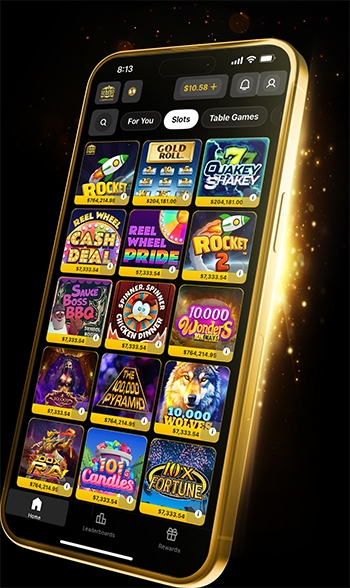
Kann baccarat spielen mit system wirklich funktionieren?
Was isch Baccarat und wie wird’s gspielt?
Baccarat isch es Kartespiel, bi dem mer uf d’Hand vom Spieler oder vom Bankier wettet. S’Ziel isch, mit zwei oder drei Chartä möglichscht nöch a 9 z’cho.
Was isch de Unterschied zwüschet RTP und House Edge?
RTP (Return to Player) isch de Prozentsatz, wo a d’Spieler zruggzahlt wird, und de House Edge isch de Vorteil vom Casino. Zum Bispil: en RTP vo 98% heisst en House Edge vo 2%.
Welchi Baccarat-Varianten gits?
Es git Punto Banco (di hüfigschti), Chemin de Fer und Baccarat Banque. Alli hend e chli anderi Regle, aber s’Grundprinzip isch gleich.
Was isch en Live Dealer Baccarat und wie funktionierts?
Live Dealer Baccarat wird mit eme echte Croupier via Videostream gspielt. Du wettisch in Echtzit und gsehsch d’Chartä live.
Welchi Empfählig hesch für Aafänger?
Für Aafänger isch Punto Banco am beschte, will’s am einfachschte isch. Wett uf d’Bankier-Hand, wil si de nidrigschti House Edge het.
Selbstausschluss und Spielerhilfe in Deutschland 2026
Glücksspiel ist nur für Erwachsene ab 18 Jahren gestattet. In der Schweiz wird das Glücksspiel durch die Eidgenössische Spielbankenkommission (ESBK) reguliert. Nutzen Sie die Selbstausschlussinstrumente der Betreiber, um Ihr Spielverhalten zu kontrollieren. Bei Problemen wenden Sie sich an Sucht Schweiz (www.sucht.ch). Setzen Sie sich persönliche Einzahlungs- und Zeitlimits und spielen Sie nur zum Vergnügen, niemals um Verluste zu jagen.
live dealer 2026 — Live-Action mit echten Dealern